Agent Killed the App Star
As AI agents rise, the interaction pattern is shifting steadily from human-to-app toward human-to-agent. What looks today like a convenience feature is really the start of a power shift: away from the apps we open, toward the agents that decide for us.
Beyond the initial world knowledge that impressed everyone at first, the agent increasingly has access to data and functions built for specific use cases. These are mostly offered by companies that already run apps or services today. Right now that happens in ChatGPT and Claude through connectors, with the Model Context Protocol (MCP) as the technical foundation behind them. Android and Apple are following with their own platform-native variants: Android ships AppFunctions with Android 16 and the Jetpack library androidx.appfunctions, while Apple’s App Intents framework has existed since iOS 16 (2022) and, as of WWDC 2026, has become the central building block of the new, Gemini-powered Siri. Both follow the same underlying pattern as MCP — declared, machine-readable capabilities instead of remote-controlling an app by screenshot — even though App Intents itself predates MCP, and AppFunctions‘ integration with Gemini is still limited to a private preview with selected testers.
That makes on-device communication between installed apps and agents like Siri or Gemini possible in much the same way cloud services such as Google Calendar are already connected to AI agents today. Whether this ends up running mostly on-device for privacy and cost reasons (think Apple Intelligence) or stays hybrid remains to be seen — a hybrid approach seems most likely: simple or sensitive requests get handled on-device by a local model, more complex ones move to server-side LLMs.
A growing number of companies now offer backend MCP connectors, for example to integrate with Claude. Claude’s directory listed around 50 connectors at the start of 2026 and roughly 440 by August 2026 — nearly a tenfold increase in seven months. Alongside major providers like Google (Drive, Calendar) or Booking.com, Strava is one of them: a training app that, beyond its web and app interfaces, grants direct access to your own training data. That completely unlocks visualization options — combinable with any other data source available.

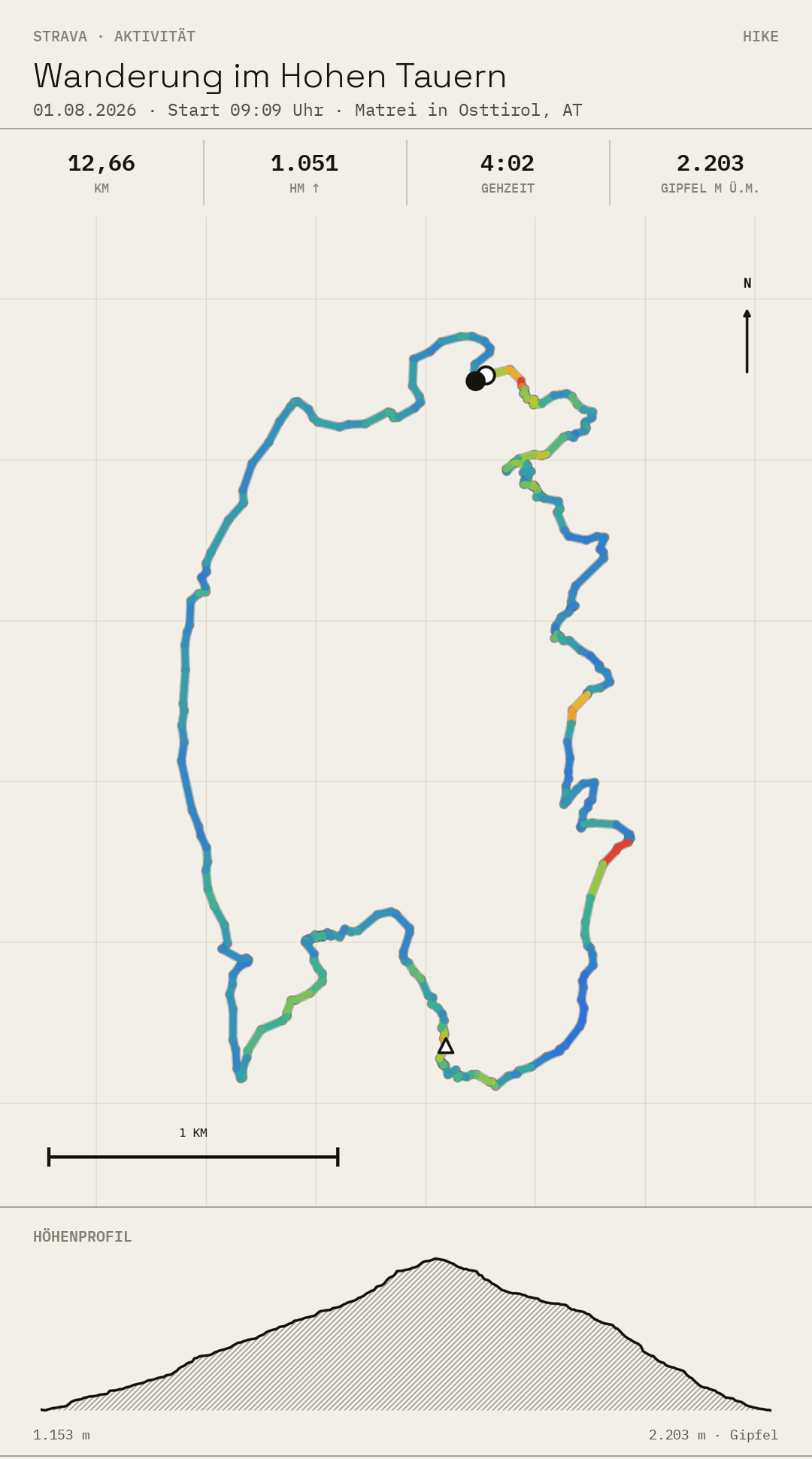
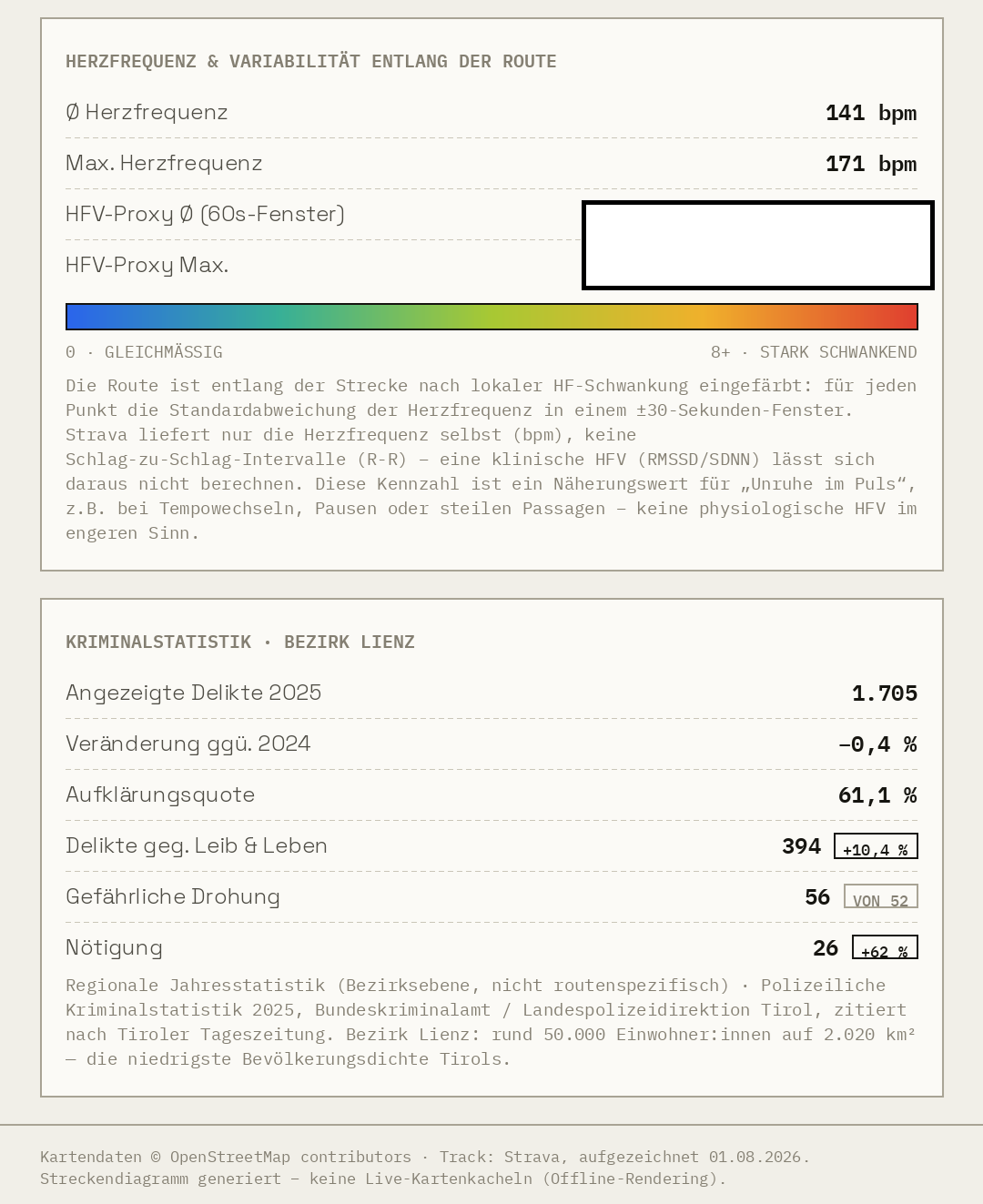
So what does that mean?
We’re facing a massive shift in the human-to-app interaction pattern. Once Gemini/Google Assistant and Siri catch up technically to where the top models already are today, you’ll be able to discuss with an agent anything you still need to open an app for now. That pushes the app into the background — mainly for routine tasks. For browsing, inspiration, and building trust with a new provider, the visual interface will probably stay relevant longer; „headless“ will first apply to the recurring, not the new.
More importantly: apps can be networked together. Strava and your calendar can be cross-referenced, and the agent can suggest a training session that fits your schedule — and adjust your dinner order to match the training plan. But if you no longer have to go into the apps to use them, what actually changes? We won’t see many apps built for people anymore, but capabilities built for agents. A person may never see a Lufthansa app again; the agent uses Lufthansa as a service provider and runs its capabilities against other airlines and aggregators, combined with hotel booking systems, climate tables, mileage accounts, and weather forecasts to compute an optimal trip: business class to Thailand, five-star hotel, in the dry-but-still-off-season stretch, for not much money — if everything lines up perfectly.
Google goes furthest here technically with the Universal Commerce Protocol (UCP): agents are meant to talk directly to payment providers and shops, with no „headless app“ in between — via APIs, Agent2Agent (A2A), or MCP as well. UCP is compatible with AP2 (Agent Payments Protocol), Google’s standard for signed payment authorizations that it introduced back in September 2025 (Intent, Cart, and Payment Mandates, with more than 60 launch partners from Mastercard to Coinbase). Together, UCP and AP2 form the stack — product discovery, cart, and payment — an agent can move through without an app. Google isn’t alone here: OpenAI and Stripe released an open counterpart, the Agentic Commerce Protocol (ACP), in September 2025, which today powers ChatGPT Instant Checkout. Inventory, pricing, and availability become machine-readable — queries like „reading lamp, at least 500 lm, under €50, stainless steel“ can be looked up, compared, and displayed directly.
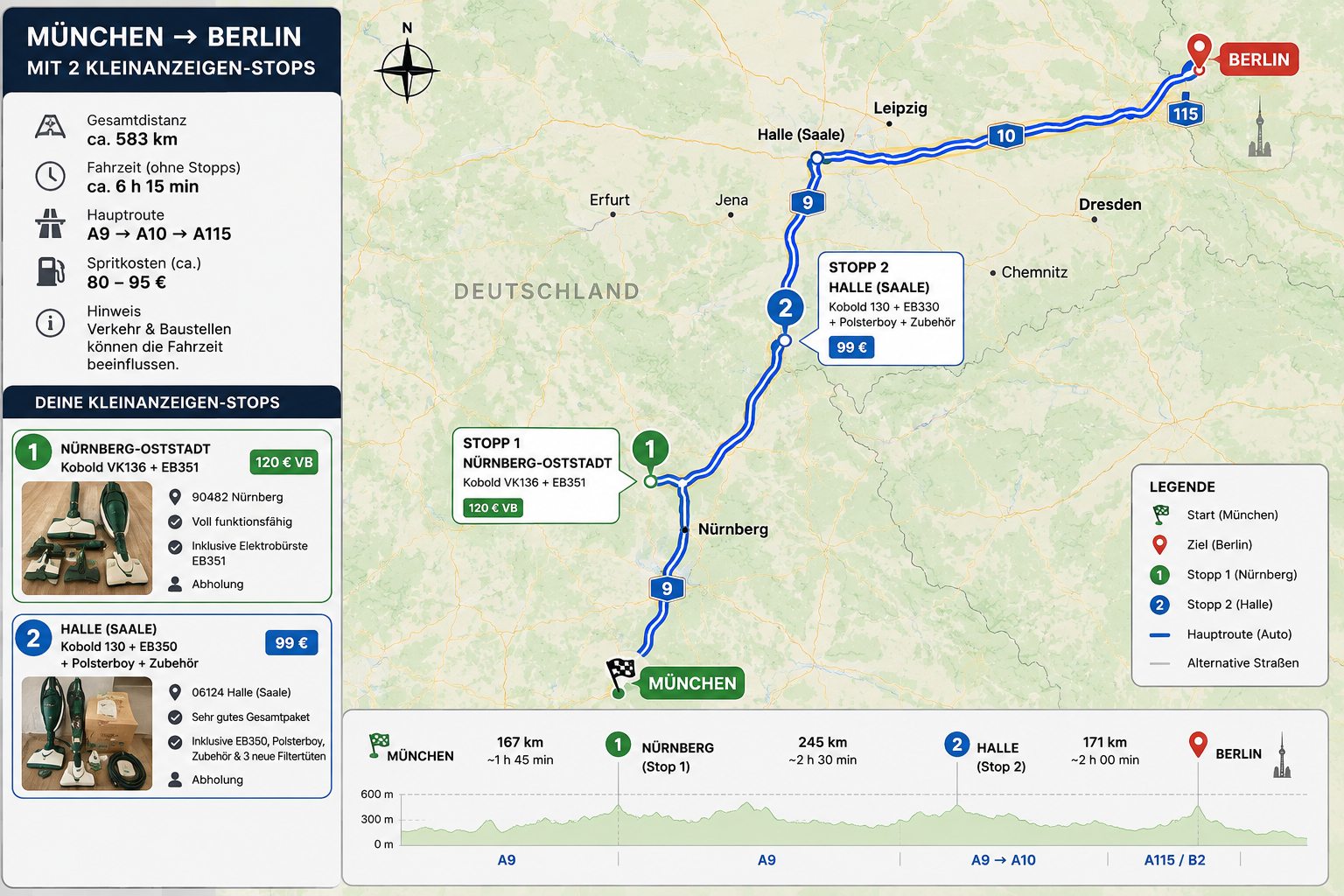
From attention to decision advertising
This also marks a fundamental break in the ad business. „Front door“ advertising shifts from „show and click“ (attention) to „the model recommends brand A over brand B“ (decision). When the agent decides which hotel, which insurer, which car, which bank, or which shop wins, it holds an extremely powerful decision layer.
Do we want that as consumers — to be manipulated permanently through framing and withheld information, more so than today and barely traceable? Or will we end up paying agents a fee for „unbiased“ recommendations? That could be money well spent, if it gets you better and cheaper recommendations in return. And: comparability goes up, moats and technological lock-ins get leveled. If Booking.com, Airbnb, Vrbo, and private listings all become queryable together through an agent, they become much easier to compare directly — price-comparison sites like Kayak have shown for 15 years that comparability alone doesn’t kill margins. What’s new is that the agent doesn’t just compare, it also chooses and books. That last step is what really puts margins under pressure.
Who gets paid
How much pressure depends visibly on each protocol’s business model. On ACP, ChatGPT charges an estimated platform commission of roughly 4% — on top of the usual Stripe fees of about 2.9% plus 30 cents per transaction. UCP, by Google’s own account, charges no transaction fee at all; instead it monetizes through advertising and the margin on Google Pay payment processing. Two different answers to the same question — who pays for the decision layer — and both make the same point: the agent isn’t neutral. It has its own business model, and that model shapes what it recommends.
Why is this different from Alexa?
The obvious objection: voice assistants with access to third-party skills already existed with Amazon Alexa and Google Assistant years ago — neither one actually took over the front door to the customer. So what’s different this time? Three things, together. First, today’s model quality is good enough to understand open, unstructured requests instead of narrow skill grammars. Second, MCP, AppFunctions/App Intents, UCP, and AP2 are, for the first time, standards carried simultaneously by several major platforms rather than proprietary silos. Third, capability providers themselves now have an economic incentive to plug in: if you don’t connect, you simply become invisible to agents.
And, the winner is …?
Probably the agents — ChatGPT, Gemini, and Siri/Apple Intelligence end up owning the front door, the relationship with the customer, and decide what gets framed and surfaced, and how. They create strong lock-in (setup is costly, and some come pre-installed, like Apple Intelligence/Siri) while also being hard to copy — which gives the agent oligopoly a strong shot at making a lot of money. That also explains why some of these companies‘ valuations look almost absurdly high.
There’s an apparent contradiction here: if open protocols make services comparable and squeeze margins, why do the agents themselves escape that same effect, given that they speak the same open interfaces? The answer isn’t in the protocol — it’s in memory. An agent’s real lock-in isn’t the technical integration, it’s the personalization and conversation history it builds up over months. No open standard can make that portable — not yet, anyway.
Capability providers like Amazon, Booking, Spotify, Strava, Lufthansa, or banks still matter — they’re the ones actually delivering the service. But they face intense competitive pressure, visual brand cues become harder to land, and they’re left to differentiate almost purely on capability and price. The intermediation/protocol layer (MCP, A2A, UCP) stays technically necessary, but functions more like flux in a solder joint: it enables communication between agent and service without capturing value itself.
The unsolved trust problem
What’s almost always missing from this discussion: security. MCP tool poisoning — manipulated tool descriptions that the agent reads but the human never sees — is now listed in the OWASP catalog. The MCPTox benchmark tested 45 live MCP servers with 353 tools and measured attack success rates above 60%, peaking at 72%. In April 2026, researchers — including a team from Johns Hopkins University — hijacked Claude Code, Gemini CLI, and GitHub Copilot using nothing more than crafted GitHub PR titles, exfiltrating CI/CD secrets in the process. NIST launched an „AI Agent Standards Initiative“ in February 2026, but an interoperability profile isn’t expected until Q4 2026. That’s one reason payment authorizations like AP2’s rely on signed mandates instead of plain API calls — and one reason to stay clear-eyed about agents with real access to money and calendars, however exciting they are.
What about Europe?
A current example of regulation already slowing this shift down, not just hypothetically: the new, Gemini-powered Siri ships with iOS 27 in fall 2026 — but not in the EU. Apple confirmed this officially in late June 2026, citing DMA requirements; this is the second time, after October 2024, that Apple Intelligence features have been withheld in Europe. For markets like Germany, that means the shift described here arrives on a delay and in a more regulated form — which buys providers time to react, but can also mean a competitive disadvantage against US players who go live sooner.
What this means for location, charging, and e-mobility
The automotive space is an extreme case of this thesis, not an edge case. Location-based services, charging infrastructure, and e-mobility consist almost entirely of capabilities an agent could orchestrate: charger availability, navigation data, billing, range prediction. If an agent pulls route planning, charging stops, and your calendar together in one step, value shifts from the app in the car to the API behind it — network operators, map providers, and OEMs become capability providers: interchangeable, unless they differentiate on quality and reliability. There’s an upside too: anyone overwhelmed today by the sheer number of charging apps, tariffs, and providers gets, for the first time, a real shot at better decisions in a market where availability, price, and charging speed vary wildly and were nearly impossible to compare before.
What actually happens now, when, and how?
The era of agents has begun. Once Siri and Gemini/Google Assistant catch up technically to where the top models already are, and can offer that at sustainable cost and acceptable latency, the scenarios sketched out above become highly likely. This shift will break paradigms that have been established for years and fundamentally change business models. New players will rise; incumbents will, at minimum, struggle.
Advertising concepts will change fundamentally too — hopefully through regulation or „pay-per-user“ monetization models that let people inform themselves transparently and without manipulation. Even so, the opportunities for manipulating the ISO/OSI „layer 8“ — that’s us, the humans — will reach new dimensions that are hard to foresee today.